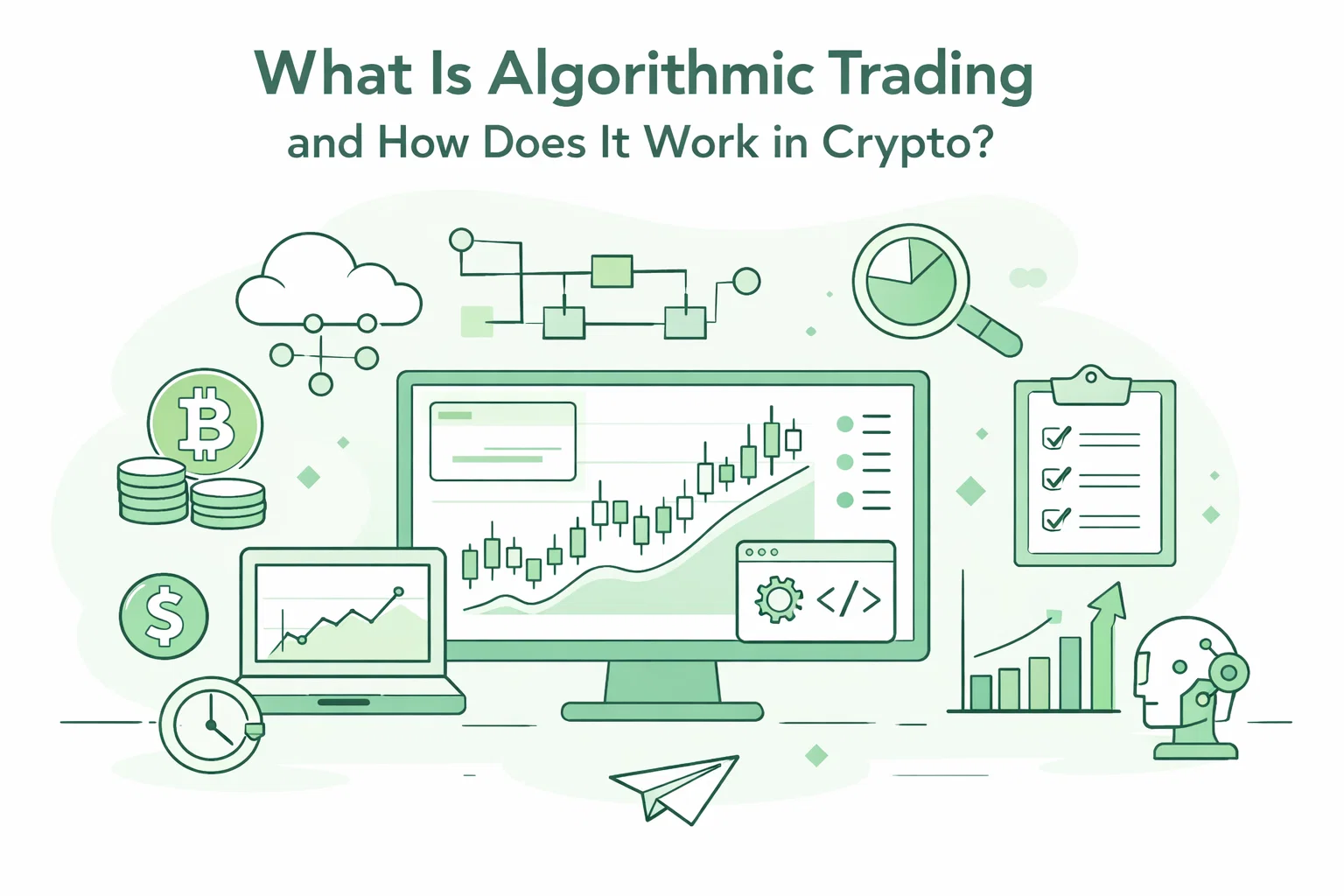
In the traditional financial world, “Algorithmic Trading” was once a term whispered only in the halls of Wall Street’s elite hedge funds. It represented a sophisticated, gate-kept method of using computer programs to execute trades at speeds and frequencies impossible for a human. Today, through Neural Engineering for Global Markets, Evolution Zenith has brought this institutional power to the fingertips of the retail investor.
But what exactly is it, and why has it become the dominant force in the cryptocurrency sector?
Defining Algorithmic Trading
At its core, algorithmic trading (or “algo-trading”) is the process of using a pre-programmed set of instructions—an algorithm—to execute trading orders. These instructions are based on variables such as timing, price, quantity, or any mathematical model.
While a human trader might say, “I will buy Bitcoin if it looks like it’s hitting a support level,” an algorithm says: “If Price (X) touches 200-day Moving Average (Y) and Volume (Z) increases by 5%, execute Buy Order (A) across 10 exchanges simultaneously.”
How It Works in the Crypto Ecosystem
The 24/7 nature of crypto makes it the perfect environment for algorithms. Unlike the New York Stock Exchange, crypto never sleeps, and volatility never pauses. Here is how the Zenith Standard operates within this space:
1. Data Ingestion and Neural Analysis
Every second, millions of data points are generated across global exchanges. Our AI nodes ingest this data in real-time. Using neural networks, the system doesn’t just look at price; it analyzes order book depth, social sentiment, and cross-exchange price discrepancies.
2. Strategy Logic and Pattern Recognition
Once the data is ingested, the “brain” of the node applies its logic. Evolution Zenith uses advanced pattern recognition to identify “Alpha”—the edge that allows for high returns with minimal involvement. Because these are neural networks, they learn from market cycles, adapting their logic as the market shifts from bullish to bearish regimes.
3. Millisecond Execution
Once a signal is confirmed, the algorithm sends the order via a secure API to your exchange. This happens with millisecond precision, ensuring the trade is executed before the market moves against you.
The Key Components of an Algo-Trading System
To understand how Evolution Zenith protects and grows your capital, it is essential to look at the three pillars of a successful algorithm:
- The Alpha Engine: This is the part of the code that finds the trade. It uses deep learning to identify patterns invisible to the human eye.
- The Risk Management Module: As discussed in our previous articles, this ensures Security and Investment Protection. It calculates position sizing and sets dynamic stop-losses to protect your principal.
- The Infrastructure Layer: This is the “plumbing” that connects the AI to the exchanges. Evolution Zenith’s infrastructure is built for high-speed connectivity and bank-grade encryption.
Why Algorithmic Trading is Essential for Crypto Investors
Traders choose Evolution Zenith because manual trading in the modern crypto market is increasingly difficult.
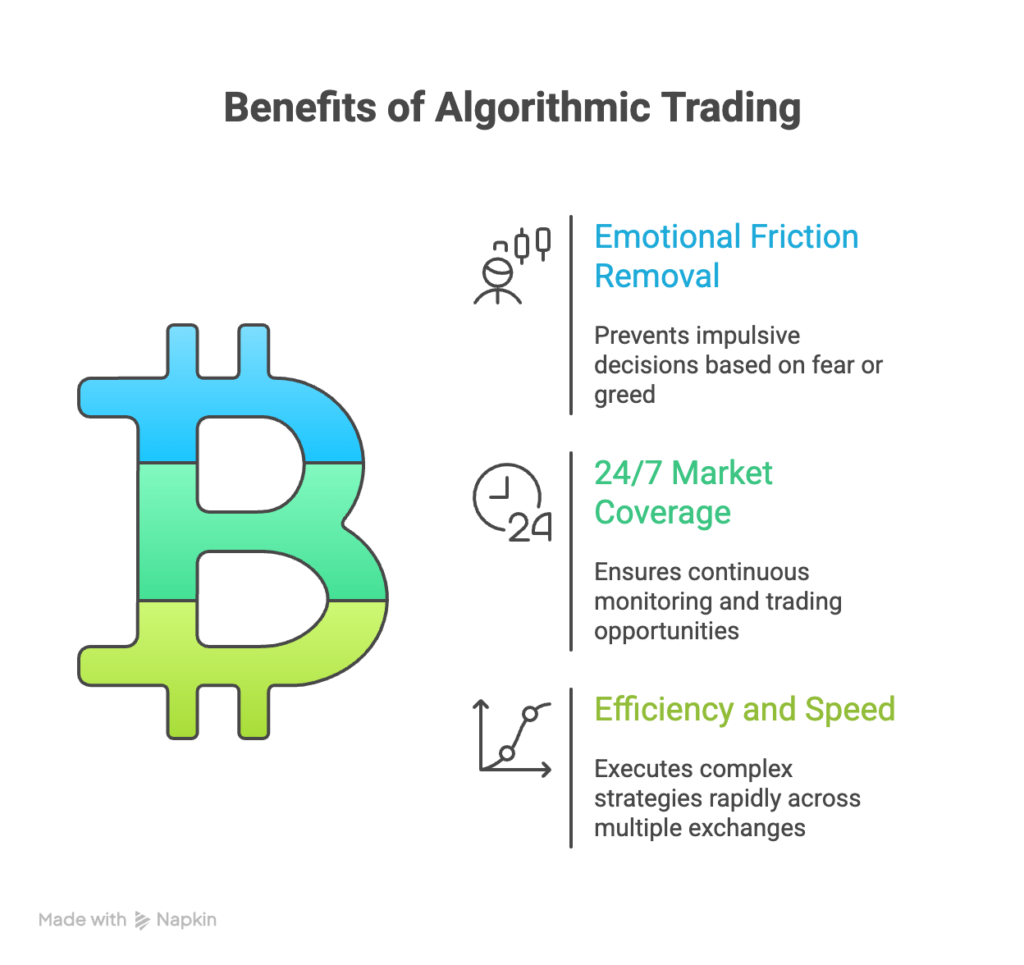
- Removing Emotional Friction: Algorithms don’t experience “FOMO” (Fear Of Missing Out) or panic. They execute the strategy with cold, calculated consistency.
- 24/7 Market Coverage: Since the AI doesn’t sleep, it can catch a 3 AM breakout or protect your portfolio during an overnight flash crash.
- Efficiency and Speed: An algorithm can scan 10+ exchanges and execute a complex multi-asset strategy in the time it takes a human to type a login password.
Conclusion: Entering the Era of Neural Wealth
Algorithmic trading is no longer a luxury—it is a necessity for those looking to compete in the high-volatility world of digital assets. By utilizing Neural Engineering, Evolution Zenith provides the gateway to institutional-grade execution while ensuring your capital remains under your total control via secure, non-custodial API integration.
The future of wealth isn’t just about working harder; it’s about trading smarter. It’s about letting the algorithms handle the complexity so you can enjoy the results.
Author
Quantitative market analyst and AI trading systems researcher with over a decade of experience in algorithmic finance and digital asset markets. His work focuses on how machine learning and data-driven models can improve trade execution, risk control, and market efficiency in highly volatile environments. At Evolution Zenith, Alex writes about the practical application of artificial intelligence in modern trading and the technologies shaping the future of global markets.